
How Watercolour Painting Supports Mental Health: Mindfulness, Calm & Creative Healing Practices
Watercolour painting is often seen as just a creative hobby, but for me, it’s become something much more than that. It’s a quiet space I can return to. A reset when things feel overwhelming. A way to gently reconnect with myself.
What I’ve come to realise is that watercolour has this unique balance to it. It asks for both focus and letting go, intention and softness. And somewhere in that balance, it can offer real support for your mental wellbeing.
Mindfulness and Being Present
One of the first things I noticed when I started painting regularly was how much it slowed me down.
There’s a natural rhythm to it. Loading the brush, watching the pigment spread, waiting for layers to dry. You can’t really rush it, even if you try.
And because of that, your attention starts to settle. You find yourself focusing on small things, like how the colour moves across the paper or how two shades blend together.
I’ve found that in those moments, my mind feels quieter. I’m not thinking about everything I need to do or worrying about what’s coming next. I’m just there, painting, paying attention.
It’s not something I set out to practice, but it’s become a really gentle form of mindfulness.
Acceptance of Imperfection
Watercolour has definitely tested my patience at times!
Paint goes where you didn’t expect it to. Colours mix in ways you didn’t plan. Edges soften or bloom without asking permission.
I used to find that frustrating. I wanted things to look a certain way, to feel more controlled.
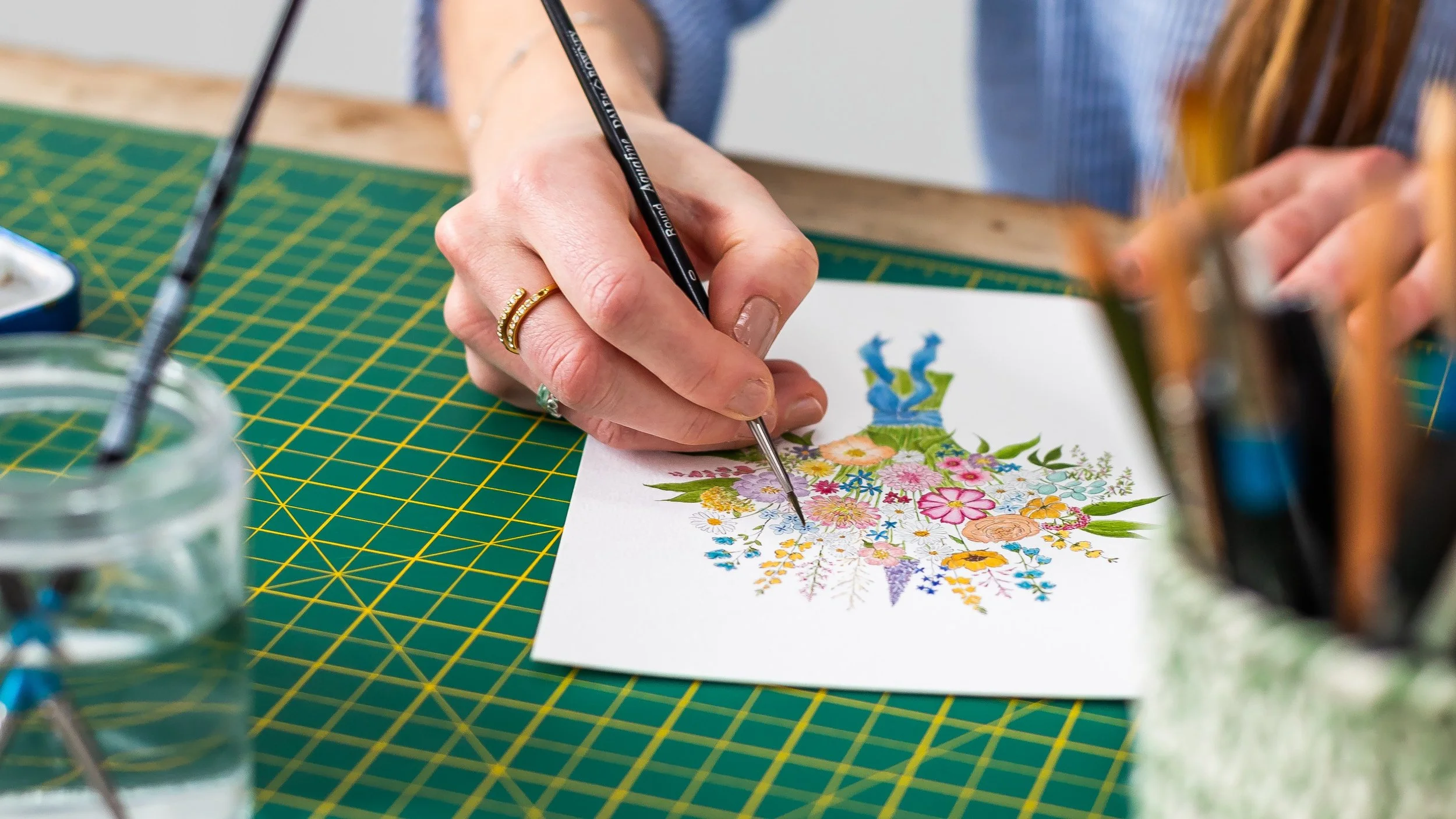
But over time, I started to approach it differently. Instead of trying to fix every “mistake”, I began to work with what was happening on the page.
And honestly, that shift has been one of the most valuable parts of painting for me.
It’s helped me let go of the idea that everything needs to be perfect. That things can be a bit messy or unexpected and still turn out beautifully.
That mindset doesn’t stay in painting either. It has a way of carrying into everyday life.
Stress Reduction Through Flow
There are times when I sit down to paint and completely lose track of time.
I’ll look up and realise an hour (or often more!) has passed without me noticing.
Those moments feel different. My mind is quieter, my focus feels easy, and everything else fades into the background for a while.
This is often called a state of flow, and I’ve found watercolour makes it surprisingly easy to slip into.
It’s not about escaping everything, but it does feel like giving your mind a bit of space to breathe.
Afterwards, I usually feel lighter and more settled, even if nothing else has changed.
Routine and Grounding
Having a small, regular painting practice has made more of a difference than I expected.
It doesn’t have to be long. Sometimes it’s just 10 or 15 minutes.
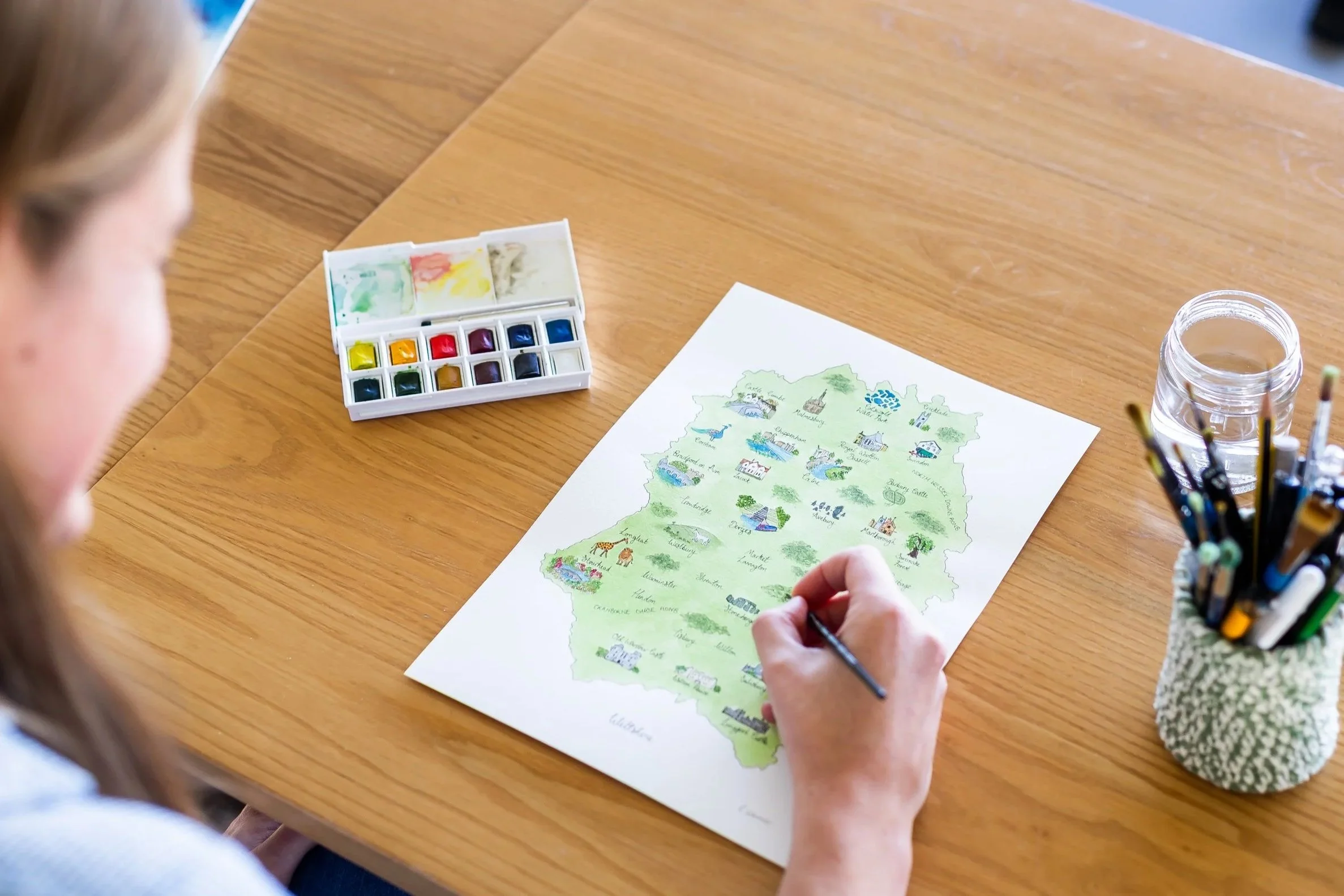
But having that time set aside, and a space I can come back to, creates a sense of stability. It’s something familiar in the middle of everything else.
My painting area has become a place I associate with calm and creativity. A place I know I can return to when I need a bit of quiet.
And there’s something reassuring about that.
It’s not really about what I create during that time. It’s about showing up and giving myself that space.
Sensory Soothing
There’s also something very calming about the physical experience of watercolour.
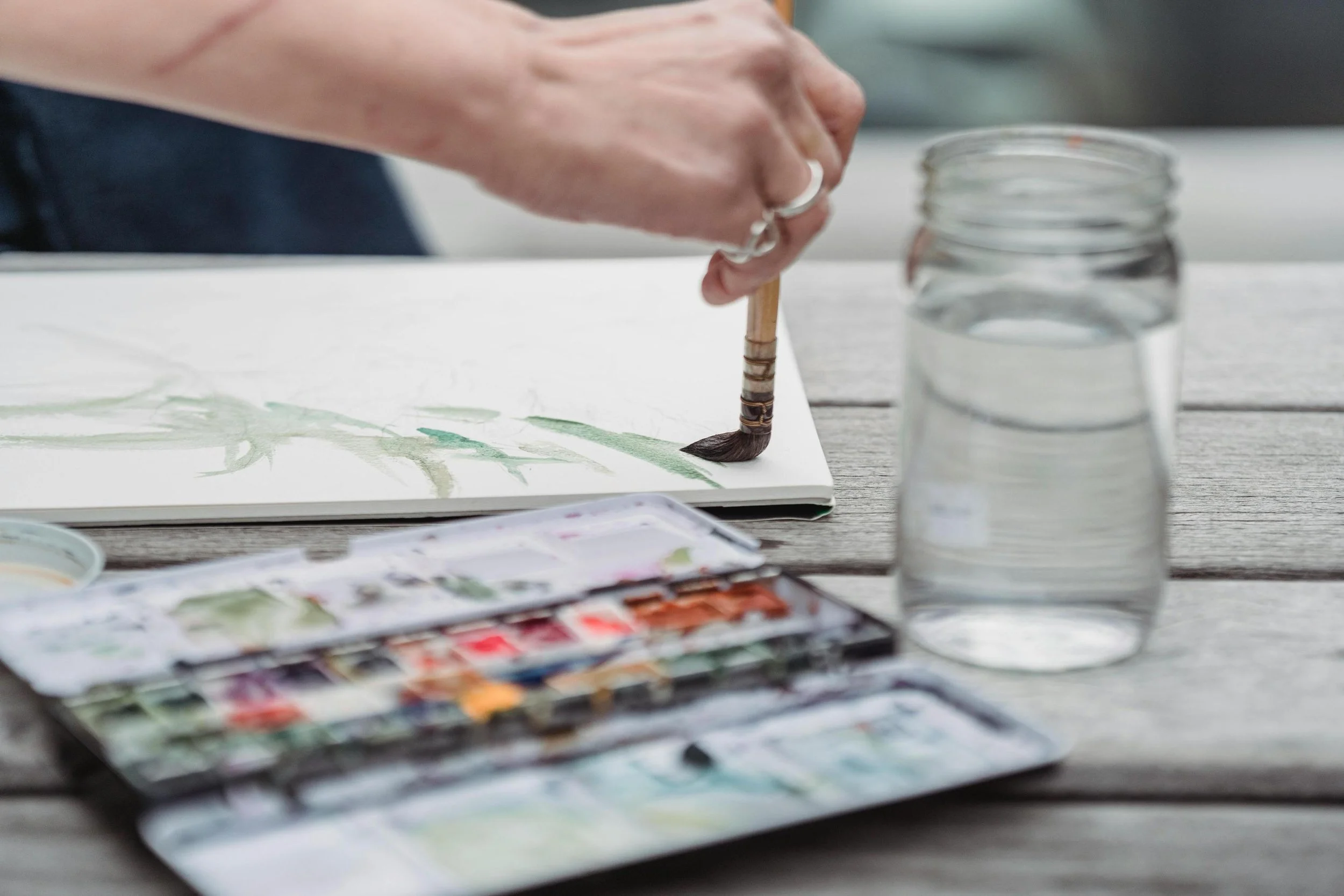
The texture of the paper under your hand. The way the brush moves across the surface. The way water carries the pigment and lets it spread.
These are small things, but I’ve found them surprisingly grounding.
When everything feels a bit overwhelming, focusing on these simple sensations can help bring me back into the moment.
It’s a softer, quieter way of settling your mind.
Simple Watercolour Exercises to Try
If you’re curious to explore this for yourself, here are a few gentle exercises I often come back to. There’s no pressure to do them “right”. They’re just small invitations to slow down and see how it feels.
Let It Bloom
This is something I return to when I notice myself wanting too much control.
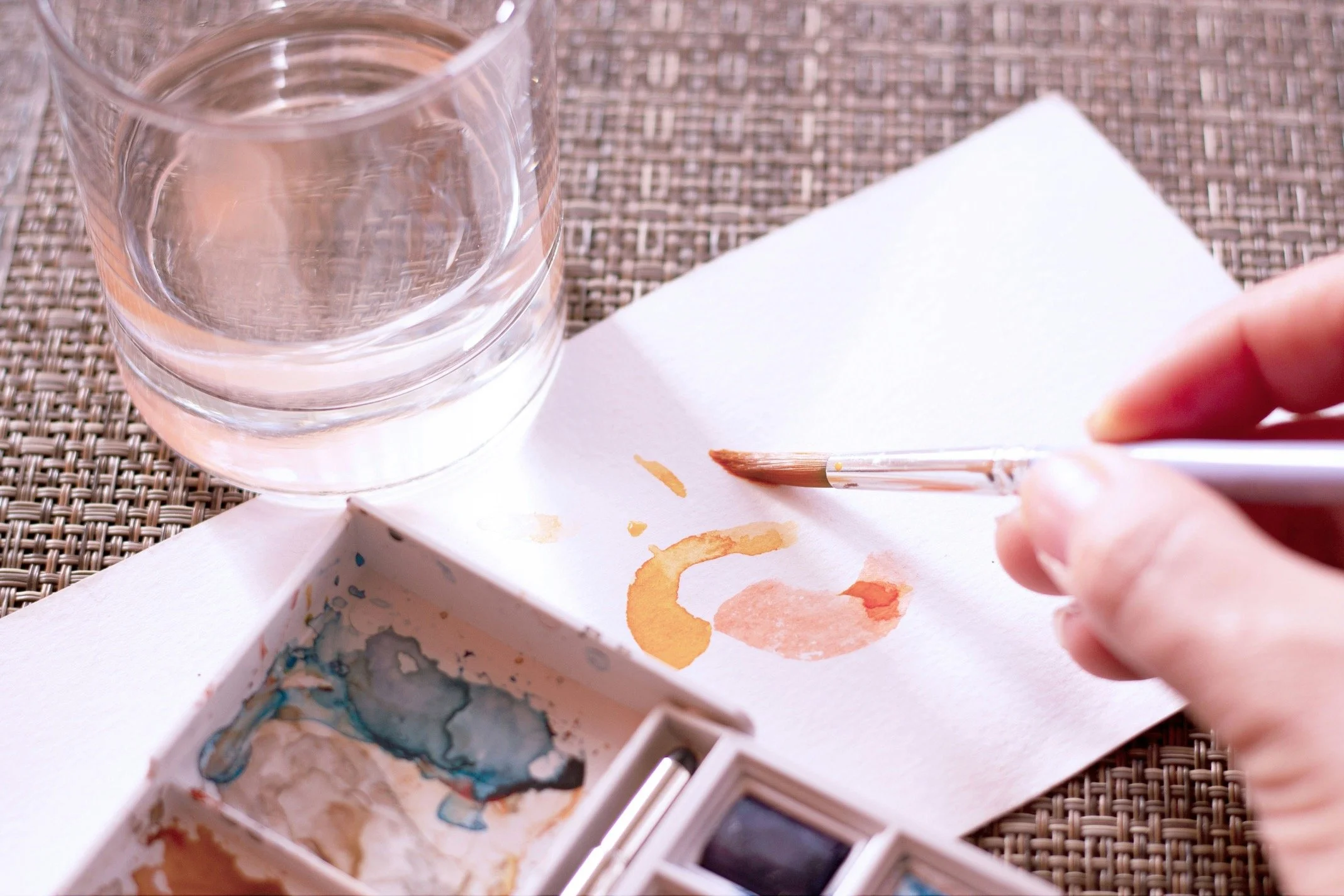
Start by dropping clean water onto dry paper, then add pigment and let it spread however it wants. You can tilt the page or add more water to encourage blooms, but try not to interfere too much.
No fixing, no correcting. Just watching.
I sometimes do a “let it bloom” page like this, just letting the paint move freely. It’s a simple way to practice letting go, even a little.
Emotion to Colour
This one is really simple, but surprisingly powerful.
Pause for a moment and ask yourself how you’re feeling. Then choose colours that match that feeling, whatever that means to you.
There are no rules here. You can paint loose shapes, washes, or just marks on the page.
Sometimes I’ll ask myself, what colour does this mood feel like today?
It’s a quiet way to express something without needing to put it into words.
10 Minute Reset Painting
On days when everything feels busy or overwhelming, this is the one I come back to most.
Set a timer for 10 minutes and paint anything at all. It could be abstract, a simple object, or just colour on the page.
When the timer ends, you stop. No overthinking, no extending it.
I often do this with no expectations, and it’s become a small reset in my day.
Sensory Swatches
Sometimes I don’t feel like “painting” anything, and that’s okay too.
I’ll just create small swatches and focus on how it feels. The pressure of the brush, the amount of water, the texture of the paper.
It becomes less about what I’m making and more about the experience itself.
I’ve found this really grounding, especially when my mind feels busy.
Close the Loop
This is a gentle way to create a sense of completion.
Choose something very small and finish it in one sitting. It might take 5 or 10 minutes, and it doesn’t need to be detailed.
There’s something satisfying about starting and finishing something in a short space of time, especially when other parts of life feel ongoing or unfinished.
A Quiet Kind of Support
Watercolour doesn’t ask much of you.
It doesn’t need to be perfect. It doesn’t need to be productive. It just offers a space where you can slow down, explore, and breathe a little.
And in my experience, that kind of space can be really important.
Mental health support doesn’t always have to be complicated or structured. Sometimes it looks like a brush, some colour, and a few quiet minutes to yourself.
Something you can come back to, again and again.
